




35 hectares of vines on the gravel soils of the Tarn, at 200 metres above sea level, between the Atlantic and the Mediterranean. An ancient terroir (130,000 to 300,000 years old), poor, stony soils that naturally concentrate the grapes, and an Autan wind that makes all the difference in autumn. And since 2012, organic certification — the culmination of forty years of work pointing in the same direction.
A wine begins in the soil. Before the cellar, before the winemaking, even before the harvest, it’s the vine and what supports it that decide what matters most. In Cadalen, Domaine Rotier sits on a terroir that took hundreds of thousands of years to form. That’s not a figure of speech: the gravel soils our vines grow on date from the Riss geological period, between 130,000 and 300,000 years ago. They are alluvial deposits laid down by the Tarn river in its ancient meanders, compacted, rolled smooth, and today covered by a thin layer of soil where the vine has to work hard to find its nourishment.
It’s this very constraint that produces quality.
Gravel soils: poor, well-drained, concentrating
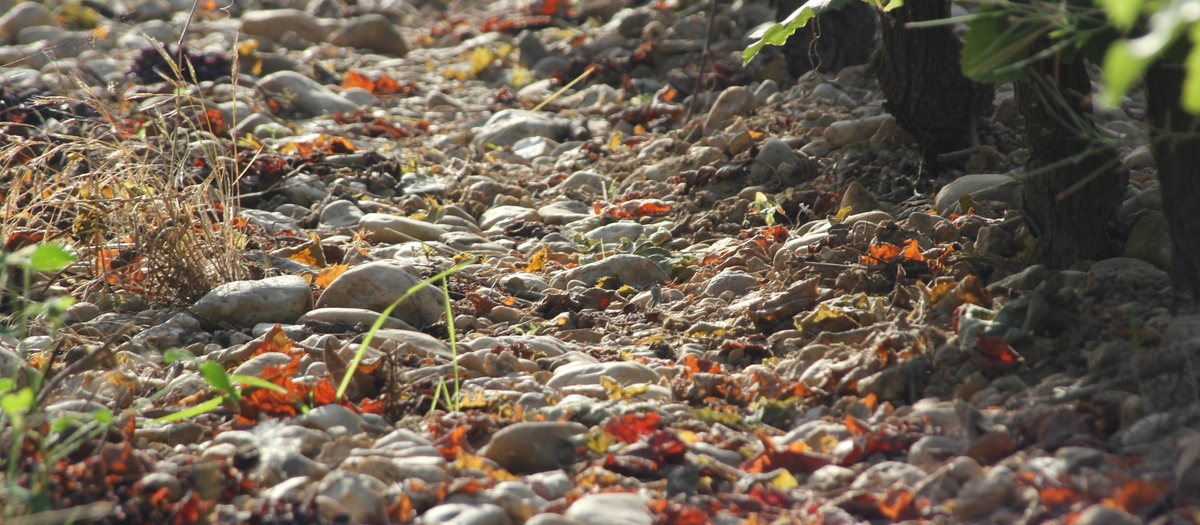
Domaine Rotier’s vineyard sits on the middle alluvial terrace of the Tarn river, which stretches from Albi to Moissac. This terrace, at 200 metres above sea level, is made up of ancient alluvial deposits 1.5 to 3 metres deep, resting on much older marl (32 million years). At the surface: pebbles and gravel rolled smooth by the river, sorted, polished, piled up over time.
These soils are poor. Very stony, with little topsoil, they don’t retain water and don’t allow for high yields. Which, for the vine, is exactly what’s wanted. A soil that gives little forces the vine to search deep for its nourishment, to explore, to concentrate. The grapes are smaller, but denser, richer in aromas. That’s why gravel soils have always produced great wines, from Bordeaux to Gaillac.
These soils warm up quickly in spring and release the heat they’ve stored during the day on cool autumn nights. That’s a decisive factor for grape ripeness. The local varieties, Duras and Len de l’El, have thrived here naturally for centuries. They produce wines that open up quickly, highly aromatic, and that age with real elegance.
The climate: between the Atlantic and the Mediterranean
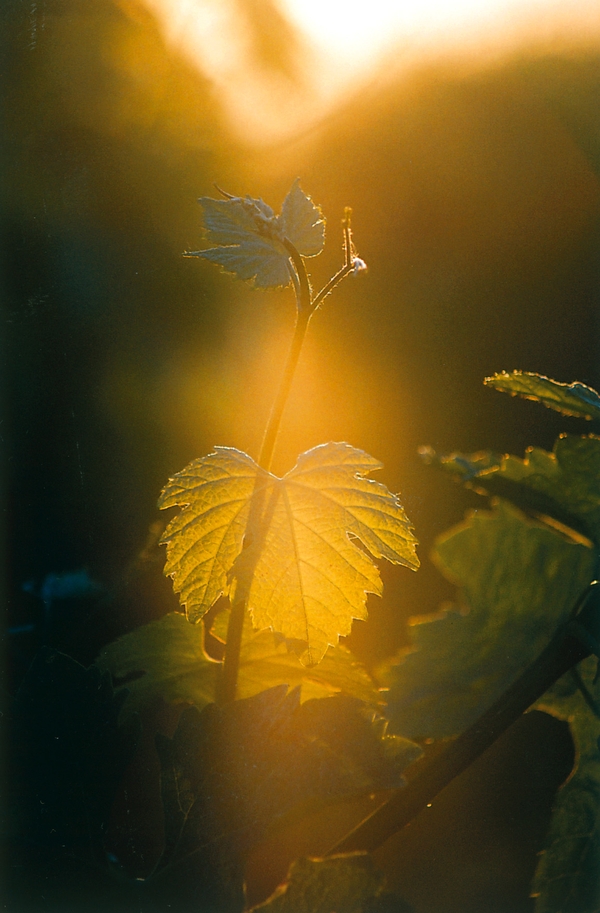
The Gaillac area sits at a climatic crossroads. Roughly midway between the Atlantic and the Mediterranean, it enjoys a predominantly oceanic climate with a marked Mediterranean influence. From the Atlantic, it receives the coolness and rainfall that maintain the natural acidity of the grapes. From the Mediterranean, it draws the heat and light that ensure ripeness.
The most distinctive climatic feature is the Autan wind. This dry, warm wind, blowing in from the south-east, sheds its maritime moisture over the Montagne Noire before reaching the Tarn and continuing on across the Gaillac hills. The result: dry, warm spells in autumn, ideal for completing the ripening of the reds and concentrating the whites.
For Len de l’El in particular, the Autan wind is decisive. Within a matter of days, it concentrates the noble rot that has developed on the bunches, producing extremely sweet grapes that give us our Renaissance Vendanges Tardives. Without this wind, these wines simply wouldn’t exist.
In figures: 730 mm of annual rainfall, an average temperature of 13.4°C, 2,115 hours of sunshine per year (averages from the Albi weather station, 1991-2010). These figures place Gaillac in a zone of optimal ripening conditions, neither too cool nor too hot, where the local varieties find their natural balance.
An estate farmed organically
Domaine Rotier has been certified fully organic since the 2012 vintage. But the approach dates back much further than that. Since 1985, no synthetic mineral fertiliser has been applied to the vines. Only organic amendments are used. Working the soil between the rows has always been standard practice here.
From 2005 onwards, synthetic systemic chemicals were abandoned in favour of more environmentally friendly treatments: copper and sulphur, applied at the right time, in the right place, at the right dose. In 2009, the certification process was officially launched. Three years of conversion later, the 2012 vintage was released bearing the organic (Agriculture Biologique) label.
Living soils
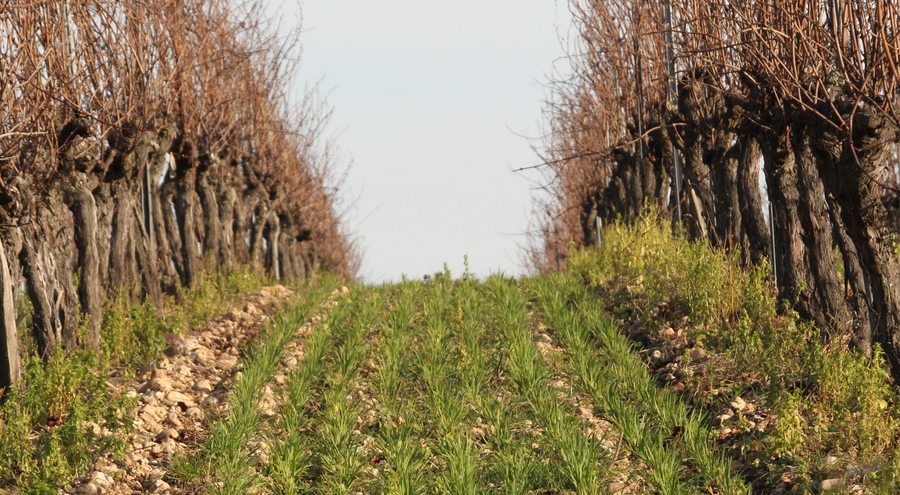
Working the soil is central to our organic practice. Cover crops are sown between every other row, using a mix of cereal (oats or rye), legume (vetch) and brassica (turnip rape). This mix does three things at once: it boosts biodiversity, its roots aerate the soil deeply, and the legume naturally enriches the soil with nitrogen. The result is a more supple, more aerated, more living soil. A vine well rooted in living soil expresses itself better than one in inert soil.
Pest control
Protecting the vines against insects relies on natural insecticides and on a mating disruption system against grape berry moths. This system, which releases synthetic pheromones across the vines, disrupts the reproduction of pest insects without killing them directly, and without affecting beneficial insects. A precise, non-polluting technique that illustrates the estate’s approach well: intervening intelligently rather than massively.
High-density vines
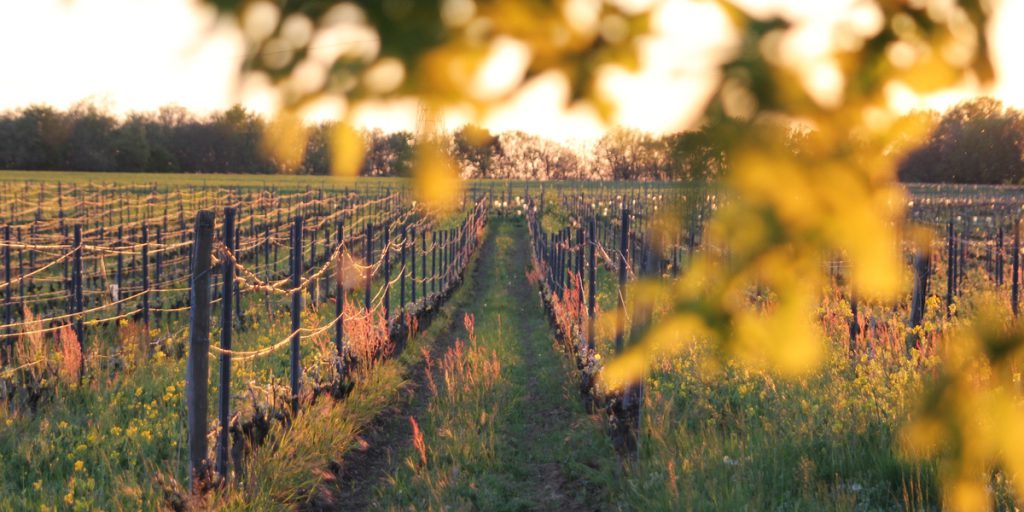
Since 2001, every new planting at the estate has moved from 4,000 vines per hectare (spaced 2.5m × 1m) to 6,170 vines per hectare (1.80m × 0.90m). Over 50% more vines on the same surface area.
The idea is simple: by increasing competition between the vines, each kilo of grapes is produced by a larger area of leaves. The vine is “stressed” in the good sense of the word — it produces less, but better. The grapes are smaller, more concentrated, richer in aromas. The roots explore the soil more thoroughly to extract every bit of flavour.
The first results, from 2005 onwards, were very convincing. Grapes from these high-density plots have progressively found their way into the estate’s best wines. All new plantings are now carried out according to this principle.
What it all adds up to in the glass
Poor soils that concentrate. A climate that balances freshness and ripeness. An autumn wind that makes all the difference. Organic viticulture that respects natural balances. And more numerous, more competitive vines that extract more from the soil.
This isn’t a recipe. It’s a set of conditions and choices which, brought together over forty years, produce wines with a clear identity: fresh, precise, aromatic wines that age well because they’re built on something solid. A terroir 200,000 years in the making, and a conviction we don’t intend to change.